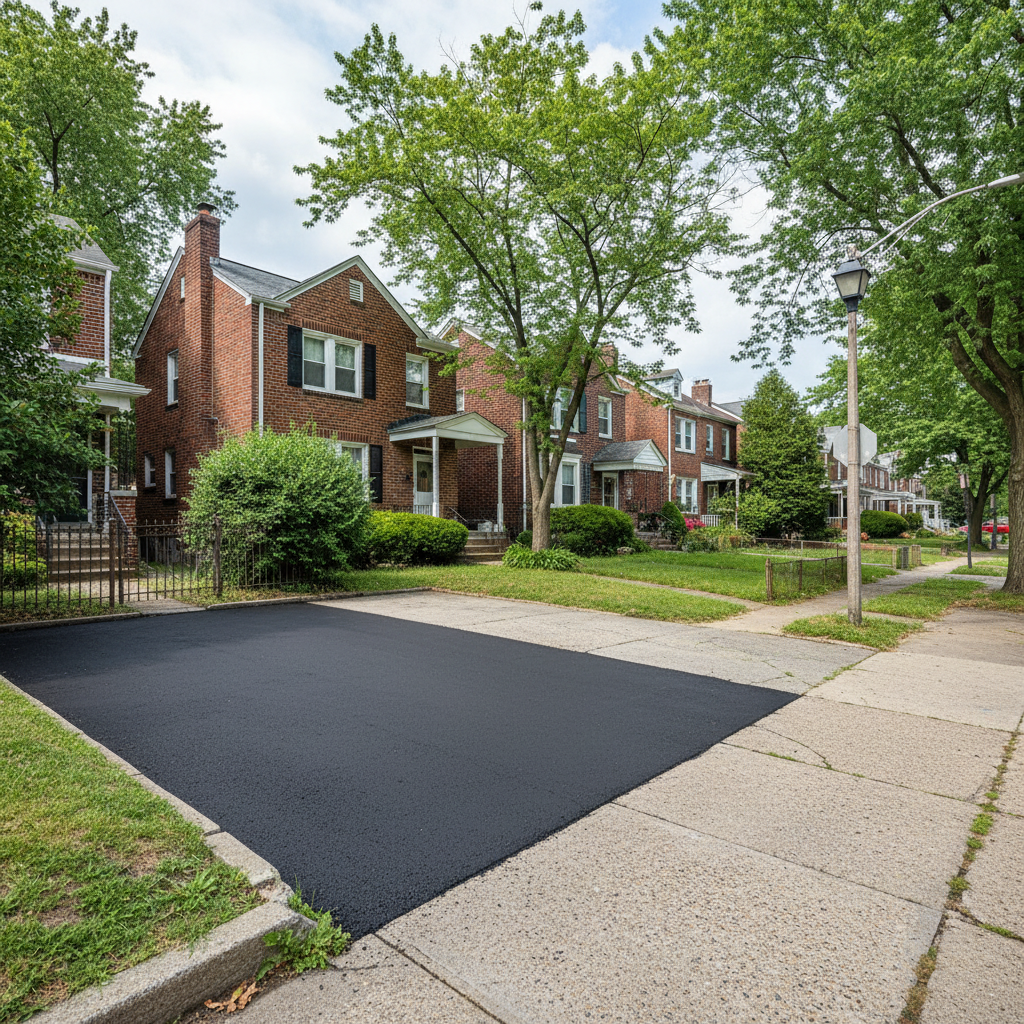
Your asphalt driveway or parking lot takes a beating, especially here in Philadelphia. We get those brutal freeze-thaw cycles that just tear up pavement, plus the constant traffic, whether it's delivery trucks in South Philly or families coming and going in the Northeast. You've seen it: those little cracks turn into big ones, then suddenly you've got a pothole big enough to swallow a small car. It's not just an eyesore; it's a hazard.
Why Patches Aren't Just a Quick Fix (When Done Right)
When folks think 'patch,' they often picture someone just dumping some cold mix into a hole and calling it a day. And yeah, you can do that for a super temporary fix, but it won't last. A proper asphalt patch, the kind that actually holds up, is a lot more involved. It's about getting to the root of the problem and making a repair that integrates with the existing pavement, not just sits on top of it.
We're not just filling holes; we're restoring the integrity of your surface. Think about it: if your foundation is cracked, you don't just paint over it, right? Same principle applies here. You want a patch that's going to stand up to our crazy weather, the heavy vehicles, and the general wear and tear of city life.
What Goes Into a Good Patch?
It starts with understanding why the pavement failed in the first place. Is it poor drainage? An unstable base? Just old age? Knowing that helps us decide the best approach. Here's what I usually look for:
- Clean Cuts: You gotta cut out the damaged section cleanly. No jagged edges. This creates a strong, defined area for the new asphalt to bond to. We're talking about a square or rectangular cut, not some amoeba shape.
- Proper Base Prep: This is huge. If the base underneath the asphalt is weak or wet, your new patch is going to fail, guaranteed. We'll dig out any soft or compromised material, compact the sub-base, and sometimes add new aggregate. It's the unseen work that makes all the difference.
- Tack Coat: This is like the glue. It's an asphalt emulsion that helps the new hot asphalt bind to the old pavement and the prepared base. Skip this, and your patch is just going to pop right out.
- Hot Mix Asphalt: We're not using cold patch for anything but emergency, temporary fixes. Hot mix asphalt, applied and compacted correctly, is what gives you a durable, long-lasting repair.
- Compaction: You can't just throw the asphalt in there. It needs to be compacted properly with the right equipment to achieve the correct density. This squeezes out air voids and makes the patch strong and watertight.
Why Local Expertise Matters in Philly
You might think asphalt is asphalt, no matter where you are. But I'm telling you, working in Philly is different. We've got those narrow streets in places like Fishtown and Queen Village, where you can't just roll in with a massive paver. You need crews that know how to work efficiently in tight spaces, often with hand tools and smaller equipment, without blocking traffic for hours on end.
Then there's the soil. A lot of our older neighborhoods, especially those built on fill or near the rivers, can have tricky soil conditions. You need someone who understands how that impacts your base and what kind of drainage solutions might be necessary. We've seen it all, from old cobblestone bases to unexpected utility lines just inches below the surface.
And, of course, the weather. Our winters are no joke. The constant freezing and thawing cycles are brutal on pavement. You need a contractor who uses materials and techniques designed to withstand that kind of stress. We at Western Asphalt Company know what works and what doesn't in this climate because we live and work here too.
Don't wait until a small crack becomes a major headache. Getting those patches done right, early on, can save you a ton of money and hassle down the road. It extends the life of your entire asphalt surface, keeping it safe and looking good for years to come.